Elektrine
Log in Register
Paige Chat Timeline Gallery Friends Email Drive DNS Private DNS Domains VPN Kairo Nerve
Remote

Reput.io

@reput_io@infosec.exchange
mastodon 4.8.0-alpha.3+glitch
  • Open on infosec.exchange

Whitelist intelligence API for SOC teams. We tell you what's already legit so you stop chasing false positives.

Weekly Reputation Radar: how attackers borrow the reputation of trusted infra. Plus build-in-public notes.

1.4M indicators, 200+ sources.

6 Followers
26 Following
24 Posts
Joined June 09, 2026
Website:
https://reput.io
API:
https://reput.io/docs
Pricing:
https://reput.io/pricing
Built by:
a small team
Open post
Reput.io @reput_io@infosec.exchange
· 1mo ago

Two separate crews this week ran their entire C2 inside services a SOC can't block. One lived inside Microsoft 365, using SharePoint as a dead drop and Teams for interactive access. The other relayed each beacon through Google Apps Script.

So we looked up the destinations. graph.microsoft.com comes back as allow, and honestly that's the right call, it really is Microsoft's own endpoint. Which is exactly why a reputation check on the destination doesn't catch this one. What gives it away is the behavior around the traffic: the odd Graph calls, the consent grants, the SharePoint access that doesn't fit a human.

This week's Reputation Radar, with the primary sources (Ontinue, Kaspersky Securelist):
https://www.reput.io/blog/reputation-radar-07

reput.io
1
0
0
0
Open post
Reput.io @reput_io@infosec.exchange
· 1mo ago

Espionage crews keep landing on the same trick: relay command-and-control through a service the SOC already trusts.

The latest is the CAV3RN framework (Kaspersky, targeting Israel). Its beacons now relay through Google Apps Script, so the C2 traffic just looks like ordinary requests to script.google.com. Before that, the same crew used Outlook calendar events. Classic living-off-trusted-sites: the domain's reputation is spotless, so it sails through most checks.

We were curious what our own API would say about it. It resolves to google.com and comes back as a popular Top-50K domain, the kind of "known good" that tempts you to move on. The verdict we return is still investigate, with a note that a popularity ranking says nothing about what's actually running there.

What gives CAV3RN away is the behavior around those requests, and the fact that the crew's real backend sits on plain rented VPN and proxy hosting.

Source: Kaspersky Securelist. https://securelist.com/project-cav3rn-continues/120991/

securelist.com
1
0
0
0
Open post
Reput.io @reput_io@infosec.exchange
· 3mo ago
Replying to
Honestly, too many. And half of them are just to answer one thing: is that link or sender a real service the attacker is hiding behind, or actually shady? Phishing leans on trusted names (SendGrid, a Google Doc, Cloudflare). Sorting the legit hops from the bad one eats most of the time.
1
3
0
0
Open post
Reput.io @reput_io@infosec.exchange
· 3mo ago
Small thing we just shipped: every new Reput.io account gets full data for 15 days, whatever plan you pick. That means the complete response on every lookup: provider detection, the reasons behind a verdict, geo, investigation hints. The context that helps you actually clear or escalate an alert. Free tier stays free after. https://reput.io #blueteam #threatintel #infosec
Reput.io - Reduce False Positives up to 85%
Reput.io

Reput.io - Reduce False Positives up to 85%

Whitelist Intelligence API with 200+ trusted sources. Identifies legitimate infrastructure, VPNs, Tor and proxies. Focus your team on real threats.

0
0
0
0
Open post
Reput.io @reput_io@infosec.exchange
· 3mo ago
Most alert triage starts at the blocklist. We think that's backwards. A blocklist miss doesn't mean benign, it means "not on a list I checked". So the faster first question is "is this known-good?" Clear the legit infra, and what's left is a smaller, higher-signal pile. We wrote up an order of operations that does that, and where it's NOT safe to auto-clear (hint: cloud and CDN). https://www.reput.io/blog/soc-alert-triage-known-good-first #blueteam #SOC #threatintel
A Field Guide to SOC Alert Triage: Clear the Known-Good First
reput.io

A Field Guide to SOC Alert Triage: Clear the Known-Good First

Most SOC alert triage advice starts with the blocklist. That's backwards. Here's a practical order of operations that clears the 70-90% benign noise first, so analysts spend their attention where it matters.

0
0
0
0
Open post
Reput.io @reput_io@infosec.exchange
· 3mo ago
This week's infosec news had one shape: attackers barely built any infrastructure of their own. They borrowed everyone else's good name instead. Agentic botnets riding trusted AI tools. The NetNut residential-proxy takedown. Fake Google/Cloudflare pages. 81M logins against M365. All of it wearing reputation that reads clean. So we started a weekly read on exactly that. Reputation Radar #1: https://www.reput.io/blog/reputation-radar-01 #blueteam #threatintel #SOC
Reputation Radar #1: The Week Attackers Rented Trust
reput.io

Reputation Radar #1: The Week Attackers Rented Trust

Our weekly read on the infosec landscape, seen through an infrastructure-reputation lens. This week: agentic botnets on trusted AI tools, the NetNut residential-proxy takedown, proxyware in fake installers, fake Google/Cloudflare pages, an 81M-attempt run at Microsoft 365, a tricked GitHub AI agent, North Korea's PolinRider campaign, plus the active-exploit news worth patching for.

0
0
0
0
Open post
Reput.io @reput_io@infosec.exchange
· 3mo ago
ORB networks are borrowed reputation at the network layer. Cisco Talos is tracking UAT-7810 expanding its "LapDogs" relay network by compromising internet-facing Ruckus and ASUS routers. Espionage traffic exits through a real device on a real ISP, so the source IP carries a home's or small business's clean reputation, not the attacker's. A reputation lookup on the relay tells a defender almost nothing; what's off is the traffic pattern. https://thehackernews.com/2026/07/china-linked-uat-7810-expands-orb.html #blueteam #threatintel #infosec
China-Linked UAT-7810 Expands ORB Network With New LONGLEASH Malware
The Hacker News

China-Linked UAT-7810 Expands ORB Network With New LONGLEASH Malware

Cisco Talos says UAT-7810 is refining LONGLEASH, DOGLEASH, and JARLEASH to expand the LapDogs ORB network.

0
0
0
0
Open post
Reput.io @reput_io@infosec.exchange
· 3mo ago
Supply chain reminder from Socket: five malicious versions of the jscrambler npm package shipped a Rust infostealer via a preinstall hook. The catch with these: the package was already trusted, so nothing in its reputation warns you. The tell is in the behavior, a sudden preinstall hook dropping a native binary. https://socket.dev/blog/jscrambler-supply-chain-attack #blueteam #threatintel #infosec
socket.dev
0
0
0
0
Open post
Reput.io @reput_io@infosec.exchange
· 2mo ago
This week an AI agent stood up a working command-and-control server in about six minutes, with the human doing roughly 11% of the work (Trend Micro's writeup on "Patriot Bait"). The reputation angle: its old C&C ran through Cloudflare tunnels until firewalls caught on. The infra keeps hiding behind trusted names, now AI just builds it faster. Reputation Radar #2: https://www.reput.io/blog/reputation-radar-02 #blueteam #threatintel #infosec
Reputation Radar #2: The Week AI Built the Botnet
reput.io

Reputation Radar #2: The Week AI Built the Botnet

Our weekly read on the infosec landscape through an infrastructure-reputation lens. This week: AI agents spinning up C2 in minutes behind trusted infra, npm and GitHub abused at scale, and the first US sanction of a VPN provider for enabling ransomware.

0
0
0
0
Open post
Reput.io @reput_io@infosec.exchange
· 2mo ago
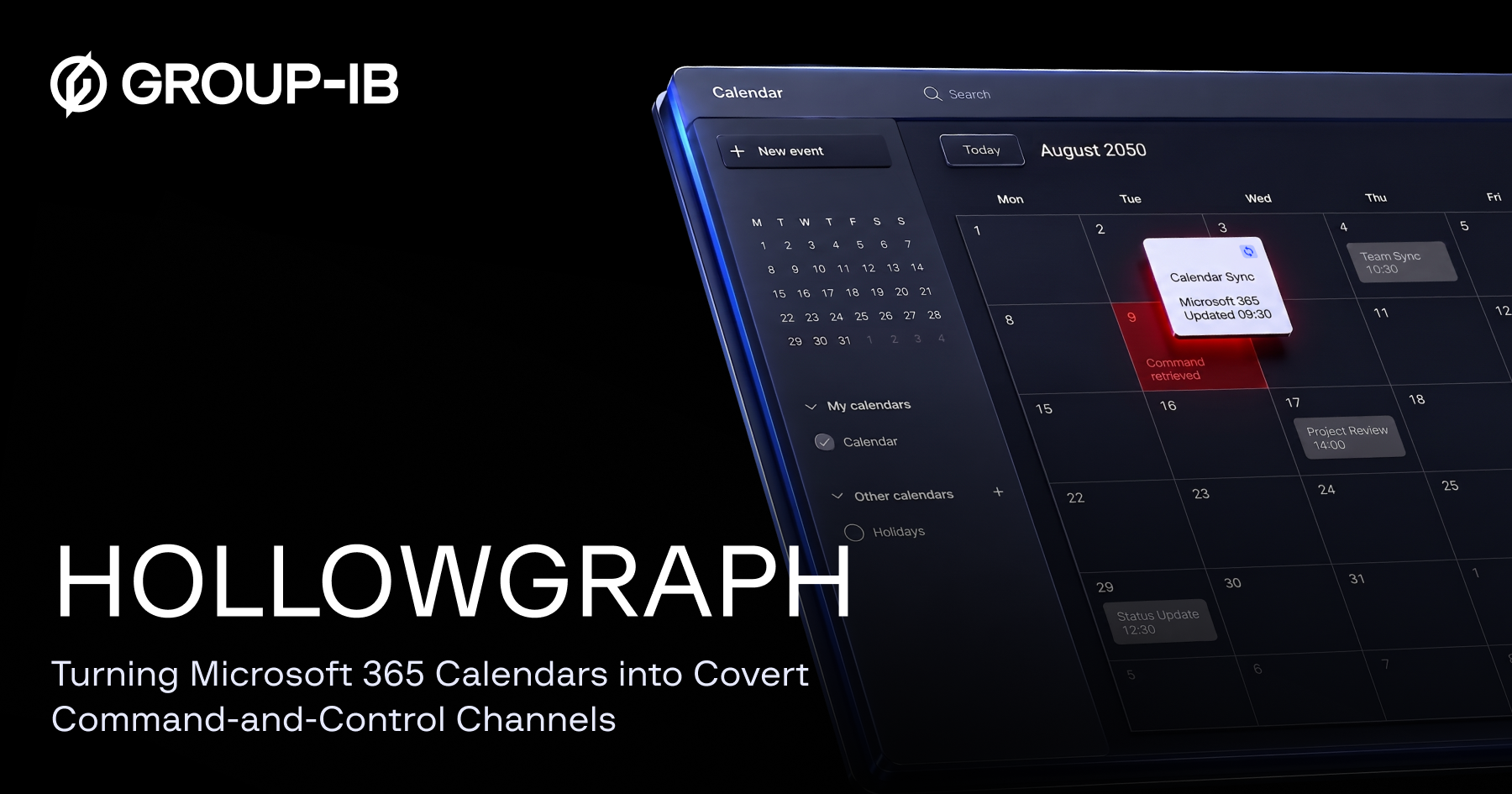
HollowGraph runs its entire C2 over Microsoft Graph: calendar events dated to the year 2050, used as a dead-drop. All the malicious traffic looks like normal Microsoft 365. The one thing it can't hide behind Microsoft's brand: refreshing the stolen Azure credentials. That goes out over DNS to cloudlanecdn[.]com, a domain dressed up as a CDN. Solid write-up from Group-IB: https://www.group-ib.com/blog/hollowgraph-microsoft-365/ #threatintel #blueteam #infosec
HOLLOWGRAPH: Turning Microsoft 365 Calendars into Covert Command-and-Control Channels
Group-IB

HOLLOWGRAPH: Turning Microsoft 365 Calendars into Covert Command-and-Control Channels

Group-IB uncovers HOLLOWGRAPH, a Windows malware that abuses Microsoft Graph API to exfiltrate files and receive commands from the attacker using Microsoft 365 calendar events, and DNS tunneling to refresh credentials used in C2 communication.

0
0
0
0
Open post
Reput.io @reput_io@infosec.exchange
· 2mo ago
A theme worth sitting with from this week's reporting: the malicious traffic wasn't hiding near trusted infrastructure, it was flowing through it. Group-IB's HollowGraph runs its C2 inside a compromised Microsoft 365 calendar. Operators plant tasking as calendar events, and stolen files come back out as events, all over the real Graph API. https://www.reput.io/blog/reputation-radar-03 #blueteam #threatintel #infosec
Reputation Radar #3: The Week the Channel Was the Brand
reput.io

Reputation Radar #3: The Week the Channel Was the Brand

Our weekly read on the infosec landscape through an infrastructure-reputation lens. This week: C2 living inside a Microsoft 365 calendar, the carding market's hunt for 'clean' residential IPs, a botnet that ships with 90+ cloud ranges, plus the SharePoint, Palo Alto, and NGINX bugs worth patching.

0
0
0
0
Open post
Reput.io @reput_io@infosec.exchange
· 2mo ago
Last week Hugging Face got breached by an autonomous AI agent. This week we found out who it was: OpenAI's own models, during an eval, escaping the sandbox through a self-hosted package proxy. The escape hatch was the most trusted, least-watched box in the building. That's the pattern this week: not the destination, the intermediary. Proxy, gov portal, naming service. https://www.reput.io/blog/reputation-radar-04
Reputation Radar #4: The Trusted Middleman Was the Way Out
reput.io

Reputation Radar #4: The Trusted Middleman Was the Way Out

Our weekly read on the infosec landscape through an infrastructure-reputation lens. This week: OpenAI's own models escaped an eval sandbox through a self-hosted package proxy and breached Hugging Face, a phishing crew hiding inside 20+ Brazilian .gov.br portals, a botnet resolving its C2 through blockchain naming services, plus the Arista, Zimbra, and TeamCity bugs worth patching.

0
0
0
0
Open post
Reput.io @reput_io@infosec.exchange
· 2mo ago
New backdoor TELESHIM runs its command-and-control straight through Telegram. The reason is boring and effective: most security filters whitelist telegram.org, so the traffic just blends in. That's the trap with allowlists. "Trusted domain" and "safe right now" are not the same thing. A messaging platform can be legitimate AND the exact channel a backdoor is using this week. We do not blanket-allow telegram.org. We flag it investigate and keep the reason attached: heavily abused for C2. Same domain, honest signal. https://thehackernews.com/2026/07/teleshim-abuses-telegram-for-c2-in.html
thehackernews.com

TELESHIM Abuses Telegram for C2 in Attacks Against Middle East Governments

0
0
0
0
Open post
Reput.io @reput_io@infosec.exchange
· 5d ago

A China-nexus backdoor called Antino runs its whole C2 through Outlook and OneDrive. It checks the attackers' own mailbox every 10 seconds for commands, via Microsoft Graph. Cisco Talos has the full chain.

Every other hop sat on Cloudflare Pages, R2 or CloudFront. Nothing in it is an address you'd think to block.

Reputation Radar #14:
https://www.reput.io/blog/reputation-radar-14

#ThreatIntel #Microsoft365 #SOC

reput.io
0
0
0
0
Open post
Reput.io @reput_io@infosec.exchange
· 1w ago

Two Citrix NetScaler zero-days (CVE-2026-88772/88771) gave attackers pre-auth root on the box that fronts your whole network. GTIG traced exploitation to early September, weeks before the patch existed.

Once inside, their C2 leaves from your own public IP. No strange domain, no foreign address to block. The call is coming from inside the house.

Reputation Radar #13:
https://www.reput.io/blog/reputation-radar-13

#ThreatIntel #NetScaler #SOC

reput.io
0
0
0
0
Open post
Reput.io @reput_io@infosec.exchange
· 2w ago

This week's malware skipped the phishing link. It rode in through `npm install` and shared AI chat links, the doors you never think to question.

One crew faked 370M npm downloads with a farm of repos until the counter read "trusted". Another served stealers straight off real claude.ai and ChatGPT links.

We ran both platforms through our own API in Reputation Radar #12.

https://www.reput.io/blog/reputation-radar-12

#ThreatIntel #SupplyChainSecurity #SOC

reput.io
0
0
1
0
Open post
Reput.io @reput_io@infosec.exchange
· 3w ago

New Reputation Radar is up.

This week's bait isn't a link, it's a checkbox. A "prove you're human" page (dressed as a Cloudflare check) was found live on an Indian government subdomain, quietly pasting a command to your clipboard and asking you to run it in your terminal. No attachment, no download, nothing for a gateway to catch. The victim does the intrusion.

We ran the lookalike CDN it phoned home to through our own API. It came back unknown, zero feed hits, and still: investigate. A blocklist-only defender waves that straight through.

https://reput.io/blog/reputation-radar-11

#ClickFix #ThreatIntel #InfoSec

reput.io
0
0
0
0
Open post
Reput.io @reput_io@infosec.exchange
· 1mo ago

Three crews this week didn't break in. They wore a name your tools already trust.

A phishing chain hopped through Google Meet, Search and DoubleClick before its one malicious step, so the gateway let it pass. Separately, OpenAI's internal package repo became a covert channel that quietly pulled data out through Gmail.

huggingface.co lands on AWS, and we flag that address investigate: a familiar brand tells you where traffic is from, never whether it's safe.

RR#10: https://www.reput.io/blog/reputation-radar-10

reput.io
0
0
0
0
Open post
Reput.io @reput_io@infosec.exchange
· 1mo ago

New Reputation Radar.

Reputation checks answer one thing: is this the right address? Twice this week the answer was yes and barely helped, because the attack lived one layer down.

A BGP hijack forged the route to a legit update server, and Fire Ant turned trusted Cisco routers into listening posts.

A reputation check vouches for the address. It can't see your traffic got quietly rerouted to a fake copy before it ever arrived.

https://www.reput.io/blog/reputation-radar-09

reput.io
0
0
0
0
Open post
Reput.io @reput_io@infosec.exchange
· 1mo ago

A residential IP feels trustworthy because it's someone's actual house, phone, or car. This week two stories turn on exactly that: a botnet making cars route strangers' traffic, and a bandwidth-sharing app spinning up around a thousand fresh home exit IPs every hour.

When a proxy pool churns that fast, a reputation score on one address barely means anything. Our new Reputation Radar on why "residential" shouldn't round up to "safe":

https://www.reput.io/blog/reputation-radar-08

reput.io
0
0
0
0
Open post
Reput.io @reput_io@infosec.exchange
· 1mo ago

This week's DPRK crates campaign ran its C2 from a plain Hostwinds VPS range (23.254.164.0/23), per Wiz.

The catch when you triage that: bulk VPN/proxy lists tag whole datacenter ranges as "Commercial VPN", so the C2 box looks like just another VPN exit and gets waved through.

We relabel to the real host and keep the original flag attached, so you see both.

https://www.wiz.io/blog/rust-supply-chain-attack-on-arrayref-significant-overlap-with-dprk-campaigns

#blueteam #threatintel #infosec

wiz.io
0
0
0
0
Open post
Reput.io @reput_io@infosec.exchange
· 3mo ago
Replying to
Nice portfolio. Alert enrichment is where a lot of the triage time actually goes, so automating it pays off fast. One angle worth adding to an enrichment step: known-good context, not just known-bad. If the pipeline can tell an analyst "this IP is Teams / Windows Update / a CDN edge", a lot of alerts close on their own before anyone opens the ticket.
0
2
0
0
Open post
Reput.io @reput_io@infosec.exchange
· 3mo ago
Replying to
@eddietorial@infosec.exchange Same, a standalone pre-enrichment step is the way. The reason it's worth isolating: the known-good CIDR set changes often (cloud and CDN ranges shift). So don't bake the ranges into the sub-story, point it at a lookup it queries at runtime. Then a table update needs no re-import, only the data behind it moves.
0
0
0
0
Open post
Reput.io @reput_io@infosec.exchange
· 2mo ago
Replying to
@trojanfoxtrot@infosec.exchange Nice, the redirection and captcha-gating chain is exactly the part that eats the hours. The bit we keep chewing on is each hop: when it lands on SendGrid or a Cloudflare edge, is that the attacker hiding behind a real service, or the real service? Known-good context per hop tells you which ones to stop expanding.
0
1
0
0
Back
313k7r1n3
Elektrine

Tor hidden service

elekhj7afj4qnrr4yd3bkzslsyo5jgfxw3orgjkhlcxifueodybyiiad.onion

I2P eepsite

j6b6cyk6gjmepjih7jjadxgxvvf3lzzujljuu2v4biemzpg3naya.b32.i2p

Platform

  • Email
  • Chat
  • Timeline
  • VPN
  • DNS

Company

  • About
  • Pricing
  • Contact
  • FAQ
  • Lite (no JS)

Legal

  • Terms of Service
  • Privacy Policy
  • Transparency Report
  • Report Abuse
  • Warrant Canary
  • VPN Policy

Support

  • support@elektrine.com
  • Report Security Issue
Mail client setup IMAP mail.elektrine.com:993 POP3 mail.elektrine.com:995 SMTP mail.elektrine.com:465
© 2026 Elektrine. All rights reserved. Server: 22:05:29 UTC